
Modular Automation: The Quiet Engine Behind Modern Factory Floors
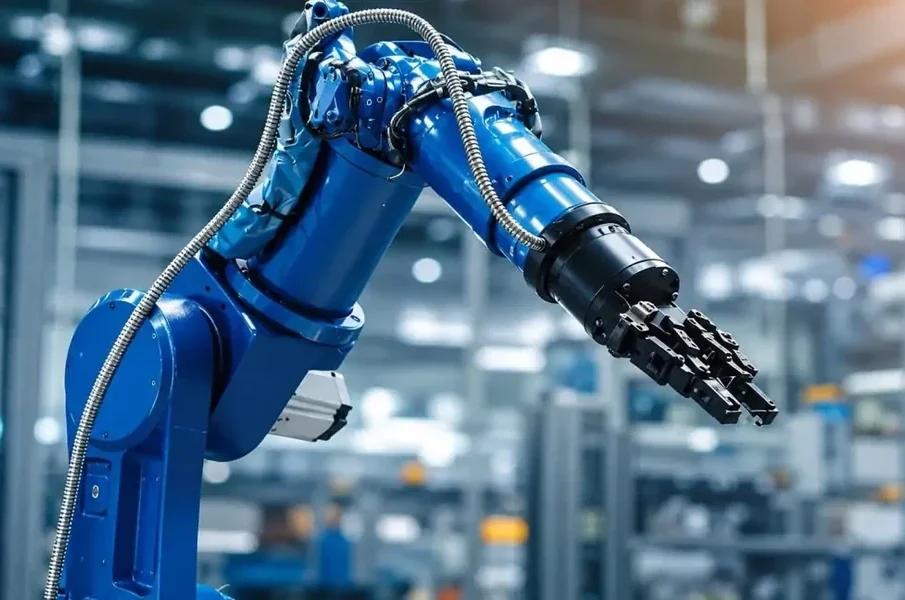
Walk through almost any production hall built in the last decade, and you’ll notice something the blueprints rarely capture: change happens constantly. Product lines shift, order volumes swing, and the equipment that made sense last year suddenly feels like a bottleneck. This is the reality that modular automation was built to solve, and it’s quietly becoming the backbone of factory modernization across every serious manufacturing operation.
Why Rigid Automation Is Losing Ground
For decades, automating a production line meant committing to a fixed, purpose-built system. A robotic cell was engineered for one task, on one line, often for the lifetime of a single product. That approach worked when product cycles lasted years. It doesn’t work anymore.
Today, short product lifecycles and frequent SKU changes mean a rigid system becomes obsolete faster than it can be paid off. Plant managers know this pain well: a six-figure investment in dedicated tooling that sits idle the moment a product is discontinued. Modular automation flips that equation. Instead of building one system for one purpose, engineers assemble automation from interchangeable components – grippers, sensors, controllers, and end-of-arm tooling – that can be reconfigured as production needs evolve.
What “Modular” Actually Means on the Shop Floor
The term gets used loosely, so it’s worth being precise. A truly modular automation setup is defined by three characteristics: interoperability, quick-change hardware, and software-driven reconfiguration.
Interoperability means components from different sources can communicate without custom engineering for every connection. Quick-change hardware refers to physical interfaces – a gripper that snaps onto a robotic arm in seconds rather than hours of manual recalibration. Software-driven reconfiguration allows a technician, not necessarily a systems integrator, to reprogram a task through an interface rather than rewriting code from scratch.
When these three elements come together, the result is a production line that can pivot from packaging one product to handling an entirely different one within a single shift, rather than a weekend shutdown.
The Financial Logic Behind the Trend
Automation Engineers often justify modular systems on flexibility alone, but the financial case is just as compelling. Return on investment improves dramatically when a single hardware asset can be redeployed across multiple applications instead of retired after one product run. A gripper purchased for a packaging task can, in many cases, be reassigned to a machine-tending or quality-inspection application with nothing more than a software update and a new mounting bracket.
This changes how Plant Managers evaluate capital expenditure. Instead of asking “what does this machine do,” the more relevant question becomes “how many different tasks can this investment eventually support.” That reframing is precisely why modular platforms are gaining traction in capital planning meetings that, five years ago, would have defaulted to dedicated fixed automation.
Collaborative Robots as the Natural Fit
It’s not a coincidence that the rise of modular automation tracks closely with the rise of collaborative robots, or cobots. Cobots are inherently designed around adaptability – smaller footprint, simpler programming, and safety features that allow them to work near human operators without extensive fencing.
This makes them the ideal chassis for a modular ecosystem. An Automation Engineer can take one cobot arm and, over the course of a year, use it for palletizing, then screw-driving, then quality inspection, simply by swapping the end-effector and loading a different task profile. For Production Managers under pressure to keep output steady during changeovers, this adaptability directly reduces downtime between production runs.
For teams evaluating which tooling ecosystems support this kind of flexibility, it’s worth taking the time to visit the page where end-of-arm tooling options and compatibility details are laid out in practical terms rather than marketing language.
Integration Challenges Worth Planning For
None of this is friction-free. Modular systems introduce their own complexity, mainly around standardization. Without a common communication protocol between a gripper, a robot controller, and a plant’s existing SCADA system, “modular” can quickly become “a pile of parts that don’t talk to each other.”
The practical solution most engineering teams land on is choosing components built around widely adopted interface standards from the outset, rather than trying to retrofit compatibility later. This single decision – prioritizing open standards over proprietary lock-in – tends to determine whether a modular automation investment pays off within two years or drags on as an integration headache.
Where This Leaves Factory Modernization
Modernizing a factory floor was once synonymous with tearing out old equipment and installing something new and equally fixed. That model is fading. The plants pulling ahead are the ones treating automation as an evolving toolkit rather than a one-time installation – where a robotic arm bought this year is still earning its keep three product generations later, simply because the tooling around it changed rather than the machine itself.
For Manufacturing Engineers weighing their next capital project, the question worth asking isn’t whether to automate. It’s whether the automation being purchased today can still be useful when the product line looks nothing like it does right now.


